
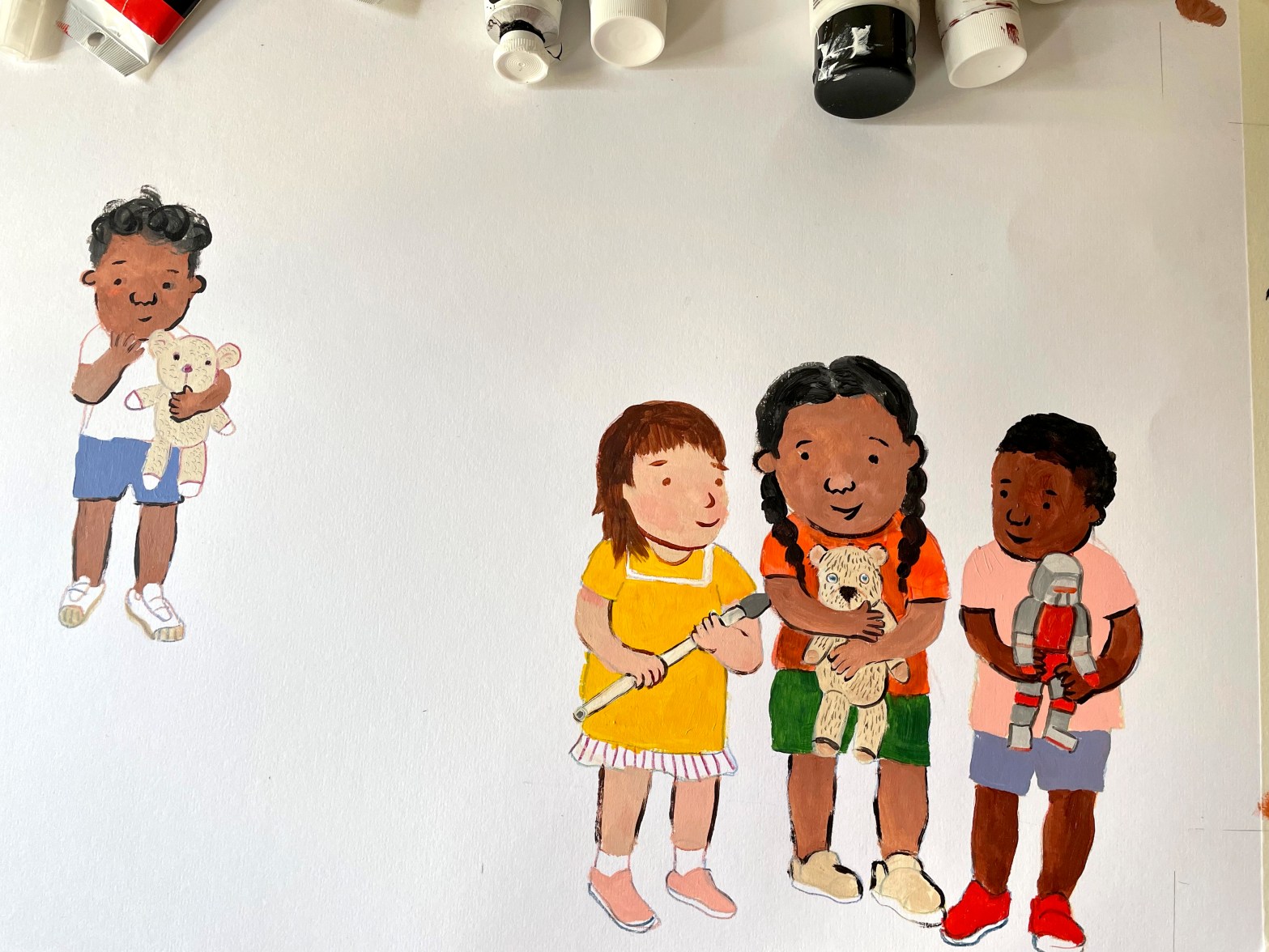
A few years ago I had the pleasure of working on a story that changed the way I make illustrations .
Together with author poet Raymond Antrobus, and the Walker Books editorial team, Dierdre McDermott, Maria Tunney and Marty Cleary, we made a fine core team! Book making is a team effort, and the wider team members ensured the book was printed correctly, marketed and publicised.

The text hints at simmering anger, and remorse but allows the reader to think and discuss what they would do in that situaton. It encourages empathy.
The book we created was a surprise for me who was making the art. It took about two years and I was encouraged to come up with something different. The process involved feeling the way forward, staying in tune with the characters and trying to embrace the experience. The best part of it was that we met in person more times that online, we printed out sketches and roughs, experimented and critiqued the work together.
It was a lovely return to a time, decades ago, when doing these things was more common practice. Sometimes I wonder if book development is becoming more transactional as competition, and production costs increase.

At the heart of the story is the conflict between a brother and older sister, and the challenge how to show the violence. WE chose the not to, thankfully, but had to create a sense of that tension and build up of anger.
Later, the boy retreats to his room and draws horses. That was the important theme, and another challenge. ‘Can you draw horses?’ They asked. ‘I never tried’ I said. There was no room to hide!
My to do list was short, but immense. A different style, non violent violence, and… horses. After some time it became clear that the violence could be implied with scribbles and bold strokes. An early attempt at comic book violence didn’t feel right.
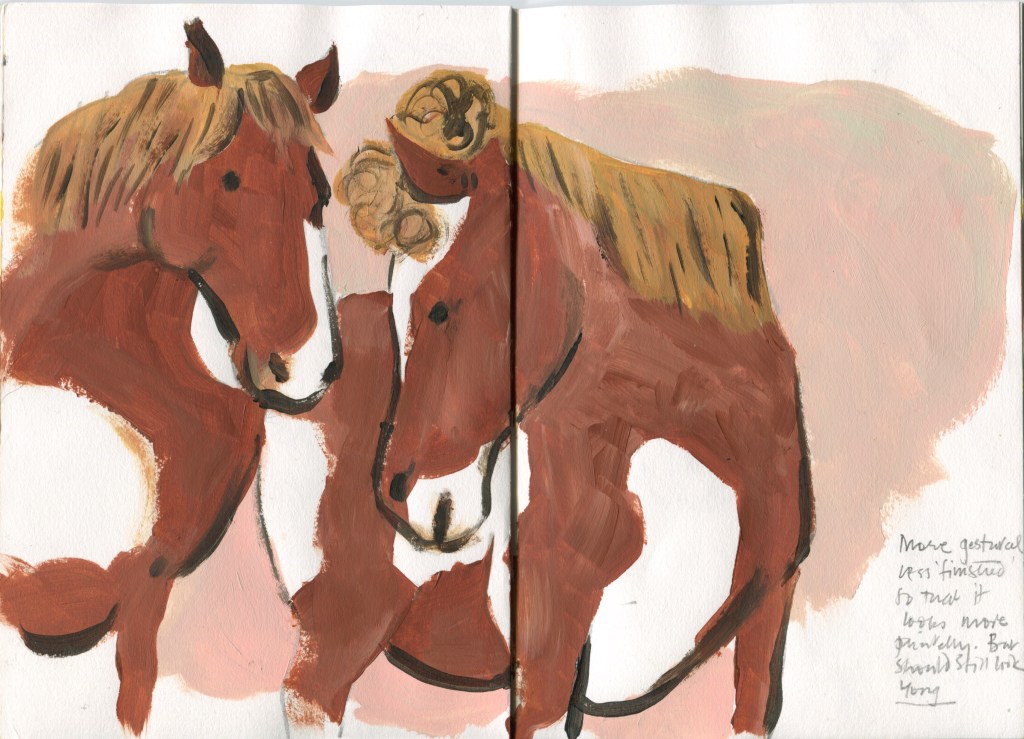


I used video and photographic reference. It wasn’t life drawing that was needed anyway, but an interpretation of horses seen through the imagination of a young boy. This led back to more questioins: Who is this boy? How would he draw horses?

Finding those answers and thinking it through with sketches provided all the answers. To keep everything organised, they were put into one sketch book untill it was full, a slight change from the days of sketching on paper and then collating the sheets, and the written notes later. This seemed like a better way and I have used it since.
The biggest learning was to embrace doing something new, by engaging in the dialogue with team members, and the book will always be a reminder to keep pushing.
Terrible Horses has been nominated and shortlisted for three awards in 2025 which is a great acknowledgement of our work. Its available from all good bookstores.

 The Illustrationist